
Tag Archive for: Relationships

Soulmate

How To Be a Soulmate Without Losing Your Soul

It’s a continual process to balance how to be a soulmate without losing your soul. It takes attitude changes and pressurized reality to learn how to balance between “we” and “me.”

When we travel by plane, we’re used to hearing the flight attendant’s safety instructions. He or she usually says something like this.

“If there’s a loss of cabin pressure, the panels above your seat will open, and oxygen masks will drop down. . . Be sure to adjust your own mask before helping others.”

If we attempt to help others before adjusting our own mask, we may end up passing out. Then we can’t help anyone. We need to take that same advice for our relationships.

[bctt tweet=”We need to care for our own soul-needs before attempting to care for others.” username=”JudyKHerman”]

It takes attitude changes to be a soulmate

Marriages are like a pressurized cabin at various times. They are not so even-keeled. We experience turbulence and high altitudes. Storms and fair weather affect our differences. Our ears pop. The ride gets rough. We’re required to stay in our seats with seatbelt securely fastened at times.

Early on in romance, our differences are exciting, novel, and energizing. After marriage, and sometimes before, our differences can become outright annoying. That’s when they can escalate into major conflicts.

Other life transitions expose the soul storms of a marriage. Raising children, career development, loss, and core differences create turbulence in life. But we can get beyond messy marriages.

Many Christian couples vow, “The two of us are one.” It doesn’t take long to realize one or both are subconsciously saying things like this.

We two are one. And yes, I’m the one.

Or, in a patriarchal or what some consider a “biblical” marriage, a bride may live her life like this.

We two are one. And, yes, he’s the one.

As years go by, both lose opportunities to develop their character. They lose their individual selves as well as the relationship. One of them becomes invisible. The other one gets caught up in self-delusions. Neither has insights into their own souls.

Neither one attempts to adjust their own oxygen mask. They’re too busy trying to improve, fix, or help the other. They become bitter, resentful, angry and resistant. Their world gets smaller. They become stuck. Or, figuratively, they pass out.

[bctt tweet=”Life transitions expose the soul storms of a marriage. Raising children, career development, loss, and core differences create turbulence in life.” username=”JudyKHerman”]

It takes pressurized reality to be a soulmate

It takes two to honor each other and respect one another’s differences. And it still takes two to do that in a relationship. Here’s points to consider.

  1. Conflict is necessary for personal and relationship awareness.
  2. Don’t avoid it or run from it.
  3. Don’t criticize your partner or try to win them over to your side.
  4. Instead, be open. Listen to understand. There are more than two ways to resolve a conflict.
  5. Seek counseling or outside help to resolve resolvable conflicts. And to adjust to unresolvable conflicts.

World-renown researcher, Dr. John Gottman, gives us clarity. Sixty-nine percent of happily married couples have unresolved conflict. The difference between the “masters” and the “disasters” are this. The “masters” are the ones who adjust and accept their partner’s differences. The “disasters” allow perpetual resentment and negativity to grow.

Here are ideas on how to adjust our own soul mask

  1. Do breathe deeply when you feel reactive, irritable, angry, or triggered by your spouse. Slow down. You’ll get clarity when you do.
  2. Be curious about what’s going on inside of you. Ask yourself, “What’s unfinished in my life? Why did this situation or comment make me feel this way? What is the meaning I created from that interaction?”
  3. To increase self-awareness, reflect on this question: “How is my spouse experiencing me?”
  4. See your spouse as a gift from God. When you do, you can develop an attitude of thankfulness. You’ll nurture your soul and grow your character. Be willing to accept your spouses’ issues as helping yoube more understanding.

[bctt tweet=”It takes two to honor each other and respect one another’s differences.” username=”JudyKHerman”]

The cabin pressure of your marriage will change. Those oxygen masks will drop. Always adjust yours first. Balance the “we” and “me” in romance and marriage. Your beautiful life is worth keeping your soul intact.

I’m writing more on the steps for balancing the “we” and “me” in romance and marriage. So, let’s stay in touch in the meantime.

For now, sign up for updates and preview on my new book

Beyond Messy Marriages: Divine Invitations Toward Your Authentic Self


Feature Photo by Ethan Sykes on Unsplash

Relieve Stress

Best Way To Relieve Stress Immediately

There’s a method I’ve discovered as the best way to relieve stress immediately. I’ve shared it with my clients and use it in my home every day. It’s called the seven-minute rule. What is the seven-minute rule? I’m glad you asked. Before I tell you how it works can you relate to these scenarios?

You Can Relieve Stress Immediately if. . .

  • You come home from work after a stressful day expecting to relax. When you walk in the house, it’s a wreck. No one cared to pick up after themselves. They must be lazy, you think.
  • Piled up bills are laying on the kitchen counter. The TV is blaring. The children don’t notice you because they’re on their iPads. They haven’t done their chores or homework. Or, they could at least be outside.
  • Your spouse is stressed and gives you the crying baby. And also expects you to change the dirty diaper. In an irritated tone, you ask, “what have you done all day?”
  • Your voice is firm with aggravation. The family accuses you of being mean. But it’s the only way you can get your point across.

As a result, we end up with an “I-work-so-hard-all-day-and-no-one-cares” attitude. Whatever our story, we find ways to escape the stress. Some do it by working late. Others do it by spending hours on social media. Those methods and others provide an immediate reward: dopamine, the brain’s pleasure chemical.

But, it doesn’t take long before our relationships become more distant. Those who matter most seem like strangers. And in some cases, enemies. Then we make up stories in our minds about their intentions to make our lives miserable. The results produce no teamwork in the family. Nor do we have partnership in the marriage.

[bctt tweet=” Don’t let mismanaged stress make relationships distant. Otherwise, those who matter most seem like strangers.” username=”JudyKHerman”]

Here’s how to change that cycle.

Relieve Stress Immediately —The Seven Minute Rule

The seven-minute rule is a technique that transforms stressful situations. With consistent use, we can create relaxing and peaceful connections in family relationships. What we create in a family environment can benefit in other ways. It also gives us skills to create more productive work environments.

Here’s how it works:

  • Consider seven minutes before or after any transition as sacred space. What do I mean by sacred space? It’s the place in-between a relationship that holds only gratitude and heart-to-heart connection. Nothing else. There’s no irritability, demands, criticisms or other negative interactions. That includes confrontations, stern looks, sarcasm, and cynicism.
  • The seven minutes of sacred space and time is taking deep breaths. That sacred space means slowing down to be loving and respectful. It’s focusing on being compassionate and tender with our loved ones. Also, it’s being kind and gentle regardless of the environment. It’s having an attitude of curiosity rather than judgement.
  • Let the children know you’re happy to be with them. You love them just as they are. You might say to your spouse with light-hearted honor, “I can’t believe I’m married to you! I am SO blessed.”
  • It’s your choice to love unconditionally in that seven minutes of sacred space. You take time to connect and value your relationships.

Examples of the 7-Minute Rule to Relieve Stress

  • Set the timer on your smart phone for seven minutes after pulling up in the driveway.
  • Put a reminder on your dashboard with a 3” x 5” card that reads “7-minute rule”.
  • Take deep breaths in and out with a mantra such as this. Breathe in thankfulness. Breath out stress. Or say, “I breathe in appreciation and I breathe out criticism.” Take about three or four deep breaths with the same mantra. Use that attitude for the following seven minutes of sacred time.

As you enter your home, leave your stress behind. Use deep breathing and then look into the eyes of your children and spouse. Be interested in their world.

It’s as if you’ll be walking onto “holy ground” in those seven minutes. Use it to connect, appreciate, and see the world through the eyes of your loved ones. Be willing to live in the present.

[bctt tweet=”Use the 7-minute rule to connect, appreciate, & see through the eyes of your loved ones. Make transitions sacred.” username=”JudyKHerman”]

Relieve Stress through these 7-minutes:

  • Before bed
  • When you wake up
  • Right before leaving the home
  • After you arrive at your destination
  • While sitting down for a meal
  • As you finish your meal

Any transition is seven minutes of sacred and holy space.

Try it out for a week, (7 days) and see how it works for you. I challenge you to try it for 30 days. And I’d love to hear your comments.

Here’s Your next step.

Sign up for updates for my book in progress: Beyond Messy Marriages


Unsplash photo by John Sekutowski


[convertkit form=4976276]

How to Make People Feel Special

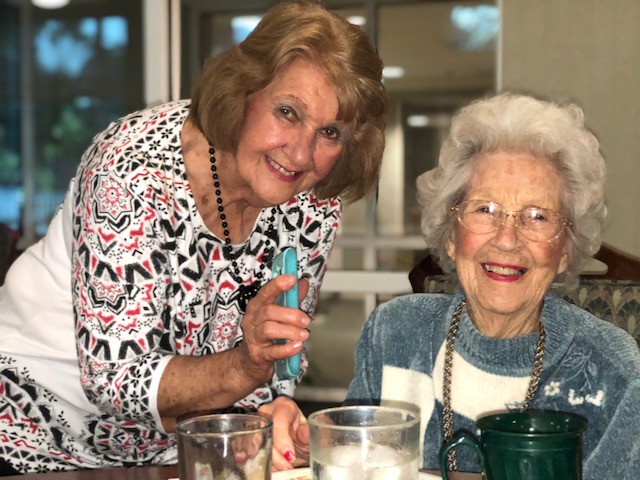
“Hi, Grandma. I have a surprise for you!”I made a quick call to my 99-year-old grandmother to tell her we were on our way to visit. It was my mom’s turn to drive as we finished the last hour of our twelve-hour trip. My grandmother has short-term memory loss. But she’s one who’s taught me how to make people feel special. I wanted to do that for her. And here are at least three ways to make people feel special. These three ways can help us connect with the humanity of the other person. When we do, we feel special, ourselves.

Make People Feel Special By Your Smiles

My grandmother has a natural smile that makes others feel comfortable. My step-dad, Bob also had a natural smile that matched his dimples. They both showed friendliness on their faces. Both could smile at strangers, acquaintances, and even their least favorite family members. Their smiles were always genuine.

But some people are born with solemn looks. It takes an effort to have a pleasant smile. It may be their facial muscles or lack of practice. But they’re unaware of how others experience them.

Whether you’re a natural smiler or not, the power of a smile makes a difference. In the presence of a small group or one-on-one interaction, a warm and pleasant smile helps us connect. And it makes others feel special.

[bctt tweet=”Even in the most stressful situations, a smile can transform; both you and other people. #beyondmessyrelationships” username=”JudyKHerman”]

If you struggle (as many do) with social anxiety, your face may be showing up as unapproachable to others. Practice your smile in front of the mirror. When you learn to do it, you’ll invite confidence in yourself and connection with others.

Make People Feel Special by Saying Their Name

It took a while before I could feel comfortable with this one. I’ve been known to immediately forget someone’s name when first introduced. But now, I say it back to the person who introduces themselves. As you continue the conversation, repeat their name a few times. It helps make the association in your brain so you don’t forget.

If you’re sitting in a meeting, jot a quick diagram with boxes. You can make a seating chart in the same way school teachers do. Then write their names in the boxes as people introduce themselves.

Here’s another idea. When the cashier is checking out your groceries, notice their name tag. Use their name as you say, “thank you.” Normally, they look up when you say their name. And sometimes they smile.

Make People Feel Special by Listening

One of the most valuable gifts you can give another person is the gift of listening. Dr. David G. Benner, my Spiritual Director showed me the value of dialogue.

Dialogue is making the space between two people emotionally safe. It’s being curious rather than judgmental.

Most of us think we’re listening. But instead, we’re formatting a response in our head. Listening to build your argument, is not true listening. But listening to hear and understand is the only kind that makes people feel special.

Smile, Name, Listen

We arrived at my grandmother’s assisted living, and knocked on her door. She expected us because of my call from the previous hour. “Judy, I’m so glad to see you!” She said it with a big smile on her face, and a warm embrace to my mom and me. She listened. All three of us felt special and connected.

Sign up for updates on my book, Beyond Messy Relationships 


Relationship

3 Requirements of Real Relationships

I’ve been blessed to hear multitudes of stories counseling couples over the years. As a result, I’ve come to believe there’s three requirements of real relationships. The reason I say “real” is because some relationships don’t operate from the same reality. The story of defining real relationships begins with my learning to dance.

Relationship Patterns Are Like Dance Movements

I grew up in a faith tradition that doesn’t believe in playing cards, smoking, and drinking. Most of all, it was an unpardonable sin to engage in pre-marital dancing! As a result, it was like I denied a “real” part of myself. And it wasn’t the smoking and drinking I was drawn to.

Rather, I began to integrate freedom, movement, creativity, and music. I discovered an emotionally safe partnership through taking ballroom dance lessons. I quickly discovered dancing was like sparks of light into deeper places of my soul.

The light-hearted atmosphere of learning to dance helped me take myself less seriously. And it was a contrast from the crisis counseling work I was doing at the time. The positive energy provided joy and the lighter side of life.

After a few group and private lessons, I became more aware and skilled. During group lessons, certain dance moves felt different when we switched partners. Each dancer had their own style, frame, and posture. Each one carried a unique energy, rhythm and frame.

In a sense, we relate to our spouses through relationship patterns similar to dancing. From our family of origins, we all learned behaviors and styles. Of course, those automatic “dances show up in our adult relationships.

If we want our relationships to be real, we need to be aware of the automatic dances. Then, be willing to change them and grow. The three requirements are reciprocity, change, and fun.

Requirement # 1 – Your Relationship Requires Reciprocity 

During romance, we feel the connection and familiarity. Both partners energetically want to be together and have fun.

When the chemistry wears off, our default patterns take over. The ease of the relationship dance works for a while until normal life stressors enter. They include child-rearing differences, financial habits, career transitions, moves, and in-laws difficulties. What began as exciting and bigger than life becomes boring and irritating.

This is the time to change relationship dances. New seasons and stressful transitions are the times to change those steps and styles. And it certainly takes two to make that happen.

Remember, your relationship requires reciprocity. Here’s requirement number two.

Requirement # 2 – Your Relationship Requires Change

Every stage of life is an invitation to discovering your authentic self. As a result, you begin to discover parts of your relationship that were previously hidden. For example, the transition from couplehood to parenthood opens up new and different roles.

Research indicates a 70% drop in marital satisfaction within a baby’s first year of life. The husband/wife roles change to dad and mom. One parent may become jealous of time and attention a young child requires. It’s normal to experience anxieties during life transitions. Of course, the responsibilities of developing another human being can be overwhelming at times.

[bctt tweet=”Every stage of life is an invitation to discovering your authentic self.” username=”JudyKHerman”]

Additional financial pressure, household chores, and caring for a baby requires a shift in perspectives. Expectant parents should consider couples’ counseling. It’s better to be pro-active when anticipating major changes.

Not only in the child-bearing years, but the dance of a marriage changes with each season of life. What may have worked early on in your relationship may not be relevant now.

Remember, your relationship requires change. Here’s requirement number three.

Requirement # 3 – Your Relationship Requires Fun

We all need fun-loving energy in our partnerships. Unfortunately, negative thinking and limited beliefs take their toll on a marriage. Dr. John Gottman’s longitudinal studies of couples give us insight. The problem is not a matter of having less conflict than the average couple. Rather it’s the couples who don’t recover quickly from conflicts who are more likely to divorce. Happily married couples still experience 67% of unresolved conflict. But they’ve learned to shake it off quicker than troubled couples.

[bctt tweet=”We all need fun-loving energy in our partnerships.” username=”JudyKHerman”]

The energy we carry in our relationships affects the neurons in our brains. Plus, our body and mind holds memories of experiences and tensions. We need to be intentional about light-hearted laughter and fun activities. Especially with those closest to us.

Remember, your relationship requires reciprocity, change, and fun. But let’s examine your next move.

What’s Your Next Move?

You might have guessed that my husband and I met through ballroom dancing. And we had a great couples dance teacher. In order for any of us to learn a new rhythm in our relationships, we need help. It takes a trained relationship therapist or coach.

Remember, the three requirements of real relationships.

1. Your relationship requires reciprocity.
2. Your relationship requires change.
3. Your relationhip requires fun.

Find out what your relationship needs now. Take the relationship stress quiz.

Or you can sign up to schedule your free consultation.