

Some of us dread gathering with extended family on Thanksgiving Day. Rather than focus on gratitude and enjoying the meal, we end up feeling like roasted turkey. But it doesn’t have to be that way when we learn how not to be a turkey on Thanksgiving Day.
Holidays are strong reminders of the way things used to be. We gather with those who know our quirks, history, and points of irritation. Relationship patterns are so automatic that we don’t realize our part in creating the mess.
Even the anticipation can be stressful. We’re uncomfortable with reminders of loss. Divorce, death, or challenging relationships can make the tradition of gratitude difficult for some and unbearable for others. Some even think thoughts like, I wished we could just skip these next six weeks.
[bctt tweet=”Relationship patterns are so automatic that we don’t realize our part in creating the mess.” username=”JudyKHerman”]
We know that Thanksgiving and other holidays can be triggers to our grief and negative thinking. It’s evident that that kind of emotional and mental energy depletes us from the warm fuzzies of gratitude. But it’s possible to choose different thoughts.
Many of us disregard the basic foundation of our mental, emotional, and relational health. We push ourselves to make things just right to impress our guests. Our ability to handle stress is depleted without a consistent habit of seven to eight hours of sleep each night. Adequate cycles of sleep provide our brains the fresh charge of energy for clarity and awareness. Without proper sleep, we’re not able to cope well in stressful situations.
Slow deep belly breaths help calm impulsive words and actions. It only takes ninety seconds of deep breathing to slow the fight/flight/freeze area of the brain that lights up when we’re triggered. We’re able to access rational thoughts when someone says a mean or hurtful comment. Ancient wisdom teaches us to be quick to hear and slow to speak. (New Testament – James 1:19)
All of us, at times, unintentionally harm others. We don’t realize it because of our own unhealed emotional wounds. With rest and deep breathing, you can control your reactions. You can stop your part of a charged incident.
Deep belly breaths give you ability to reason beyond reactivity. You create neural pathways in your brain that opens up awareness. You’ll be aware of your own body reactions. Emotional triggers affect both our bodies and our minds.
Quiet the racing thoughts and stories in your head that may not be true. Even if they are true, deep belly breaths slow you down enough to gain insight into yourself, the other person, and the incident.
Make it a point to process later through journal-writing or an appointment with your therapist. Your well-being depends on you keeping resentment from building.
[bctt tweet=”Deep belly breaths give you ability to reason beyond reactivity.” username=”JudyKHerman”]
We have mirror neurons in our brains that aid our social connections. When we interact with others, we reflect their gestures, tone, body posture, and behaviors. They reflect us. We smile back when they smile at us. It’s like looking in a mirror.
A smile has the power to disarm another’s frown. Some of us were born smiling while others naturally have stoic faces. A person who looks grumpy might really be concentrating. Or they may be unaware of how they appear to others. Be conscious of how others see you. Practice smiling around those who frown. See if their frown softens with your smile. Here’s more about that: Ways to Diffuse Stress on Thanksgiving
[bctt tweet=”A smile has the power to disarm another’s frown.” username=”JudyKHerman”]
Any change is difficult as we thrive on comfort and security. When our loved one has died, or we’ve experienced divorce, or we’ve moved our family across the country, it’s important to grieve. How we accept change is unique to each of us.
We are meant to grow and change throughout our lives. People, relationships, and circumstances are continually changing. Welcome the reality that our lives will never be stagnant. They’re not suppose to be. It’s part of our humanity to grieve the loss of a loved one and celebrate the birth of new life.
It’s important to know what’s yours and what belongs to another. Your emotions are yours alone. All of us are responsible for our own resilience, emotions, and decisions.
Give yourself permission to let go of others’ expectations of you. You were only meant to handle your own emotions. Others are responsible for themselves.
When you practice the present moment, you’re living that moment to it’s fullest capacity. This could be the single most empowering advice for us all. Hyperfocus on the unfinished business of the past or continuous worry of the future steals away the only time we have in the moment.
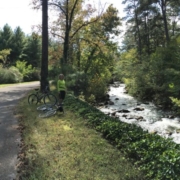
Imagine yourself standing still in the middle of a stream. You’re aware of the past like the water flowing toward you from upstream. You’re aware of the future like water flowing beyond you downstream. You feel the cool stream flow around you. Yet, you’re standing still in the present moment.
You now know how not to be a turkey on Thanksgiving Day. Begin your six practices of gratitude.
1. Practice rest
2. Practice belly breaths
3. Practice smiles
4. Practice accepting change
5. Practice what belongs to you
6. Practice the present moment
Sign up for your free Relationships With Purpose Toolkit.
I’ve been to a multitude of conferences throughout my career as a counselor. Yet, I was ready to hang out with writers and influencers beyond the four walls of my private practice. If you’re like me, you’ve attended several conferences. Even though there may be hundreds of people, you feel alone and disconnected. And I’ve learned 4 ways to make the most of conference relationships.
The last few years I attended Jeff Goin’s Tribe Conference for writers and artists. This is a gathering of those who want to expand their influence and hone their craft. I resonate with Jeff because he thrives on relationships. And isn’t afraid to brag about his own therapist. Not only is he young enough to be my son, but he’s one of the wisest 34 year olds I know. And to me, he looks like he’s 14.
You may attend a conference for continuing education in your profession. Or you may plan on participating in an event that compliments your career. And here are four ways to make the most of conference relationships.
With my first conference in 2015, I didn’t know a soul, but I intentionally sat at the front table to focus and learn. I’m great at listening and comfortable with face-to-face connections. But, I lagged behind with follow-up.
At that time I was still a novice at social media. Many therapists are. Some don’t have personal Facebook accounts for fear of rejecting a client who asks to be a friend. Growth seems to require an element of risk for all of us.
I learned to connect with conference acquaintances through Linked In and Facebook.
Volunteering brings a sense of community. I was proud of the red T-shirt I got in Seattle at the Gottman-Siegel Summit in previous years. Being a volunteer at conferences connects you with people you wouldn’t otherwise know.
By year two of Tribe Conference, I volunteered with intentions to connect. I joined a coaching group and became a Tribe Girlfriend on a closed Facebook group. Our group met regularly all year through webcam calls. We laughed, prayed, encouraged, and shared words of wisdom along with our ideas. On a monthly basis, we challenged each other to write and be clear and focused. It was a challenge to coordinate our time zones from California to Tennessee. But we did it.
Our time together grew our trust as a group. We began to know each other’s strengths, weaknesses, vulnerabilities, and trials. We empathized and asked hard questions. When tragedy struck, we were there for each other. Our friendship deepened as writers.
After three years, our meetups grew from a handful of insecure patrons to a confident gathering of trusted and familiar friends. Some of us met for the first time in person comparing the postage stamp facebook profiles with the live person.
“Oh, you look just like your picture.”
Or you’d hear phrases like, “Oh, that’s you? The one who. . .?”
However the greeting began, it would continue as, “I’m so glad to meet you.” We’re hugging, smiling, thanking, and connecting.
[bctt tweet=”Laughter is spontaneous, but relationships require intentional connections.” username=”JudyKHerman”]
Marsha Shandur, was the speaker who normalized our awkwardness as “dork goblins” when we meet new people. It was a brilliant and funny way to present what I do less brilliantly and funny for my clients in counseling sessions. She demonstrated her own quirks and how to respond to the insecure parts of ourselves. Give the insecure part a name. When it shows up, and take deep breaths when our bodies react to anxiety.
There were many highlights: speakers, meet-ups, books, networking, notes, gormet popcorn, chocolate, and conversations at the conference. It’s not just about learning new ways to think, and do, and be. It’s about the Tribe. It’s about ways to grow conference acquaintances into friendships.