
Relationship

3 Requirements of Real Relationships

I’ve been blessed to hear multitudes of stories counseling couples over the years. As a result, I’ve come to believe there’s three requirements of real relationships. The reason I say “real” is because some relationships don’t operate from the same reality. The story of defining real relationships begins with my learning to dance.

Relationship Patterns Are Like Dance Movements

I grew up in a faith tradition that doesn’t believe in playing cards, smoking, and drinking. Most of all, it was an unpardonable sin to engage in pre-marital dancing! As a result, it was like I denied a “real” part of myself. And it wasn’t the smoking and drinking I was drawn to.

Rather, I began to integrate freedom, movement, creativity, and music. I discovered an emotionally safe partnership through taking ballroom dance lessons. I quickly discovered dancing was like sparks of light into deeper places of my soul.

The light-hearted atmosphere of learning to dance helped me take myself less seriously. And it was a contrast from the crisis counseling work I was doing at the time. The positive energy provided joy and the lighter side of life.

After a few group and private lessons, I became more aware and skilled. During group lessons, certain dance moves felt different when we switched partners. Each dancer had their own style, frame, and posture. Each one carried a unique energy, rhythm and frame.

In a sense, we relate to our spouses through relationship patterns similar to dancing. From our family of origins, we all learned behaviors and styles. Of course, those automatic “dances show up in our adult relationships.

If we want our relationships to be real, we need to be aware of the automatic dances. Then, be willing to change them and grow. The three requirements are reciprocity, change, and fun.

Requirement # 1 – Your Relationship Requires Reciprocity 

During romance, we feel the connection and familiarity. Both partners energetically want to be together and have fun.

When the chemistry wears off, our default patterns take over. The ease of the relationship dance works for a while until normal life stressors enter. They include child-rearing differences, financial habits, career transitions, moves, and in-laws difficulties. What began as exciting and bigger than life becomes boring and irritating.

This is the time to change relationship dances. New seasons and stressful transitions are the times to change those steps and styles. And it certainly takes two to make that happen.

Remember, your relationship requires reciprocity. Here’s requirement number two.

Requirement # 2 – Your Relationship Requires Change

Every stage of life is an invitation to discovering your authentic self. As a result, you begin to discover parts of your relationship that were previously hidden. For example, the transition from couplehood to parenthood opens up new and different roles.

Research indicates a 70% drop in marital satisfaction within a baby’s first year of life. The husband/wife roles change to dad and mom. One parent may become jealous of time and attention a young child requires. It’s normal to experience anxieties during life transitions. Of course, the responsibilities of developing another human being can be overwhelming at times.

Every stage of life is an invitation to discovering your authentic self. Share on X

Additional financial pressure, household chores, and caring for a baby requires a shift in perspectives. Expectant parents should consider couples’ counseling. It’s better to be pro-active when anticipating major changes.

Not only in the child-bearing years, but the dance of a marriage changes with each season of life. What may have worked early on in your relationship may not be relevant now.

Remember, your relationship requires change. Here’s requirement number three.

Requirement # 3 – Your Relationship Requires Fun

We all need fun-loving energy in our partnerships. Unfortunately, negative thinking and limited beliefs take their toll on a marriage. Dr. John Gottman’s longitudinal studies of couples give us insight. The problem is not a matter of having less conflict than the average couple. Rather it’s the couples who don’t recover quickly from conflicts who are more likely to divorce. Happily married couples still experience 67% of unresolved conflict. But they’ve learned to shake it off quicker than troubled couples.

We all need fun-loving energy in our partnerships. Share on X

The energy we carry in our relationships affects the neurons in our brains. Plus, our body and mind holds memories of experiences and tensions. We need to be intentional about light-hearted laughter and fun activities. Especially with those closest to us.

Remember, your relationship requires reciprocity, change, and fun. But let’s examine your next move.

What’s Your Next Move?

You might have guessed that my husband and I met through ballroom dancing. And we had a great couples dance teacher. In order for any of us to learn a new rhythm in our relationships, we need help. It takes a trained relationship therapist or coach.

Remember, the three requirements of real relationships.

1. Your relationship requires reciprocity.
2. Your relationship requires change.
3. Your relationhip requires fun.

Find out what your relationship needs now. Take the relationship stress quiz.

Or you can sign up to schedule your free consultation. 

Getting Unstuck For a Dynamic 2018


Getting unstuck for a dynamic 2018 enables fresh energy and motivation. It clears away subconscious negativity and makes room to live fully in the present. It allows us to have a clear vision for meaningful goals.

Those who cannot remember the past are condemned to repeat it. — George Santayana Share on X

Getting Unstuck: Wisdom From Technology

For example, an unfinished past is like issues I had with my iPad. All of a sudden a small white pinwheel in the middle of a blank screen kept going around in a rhythmic fading/returning circle over and over again. I tried clicking a combination of buttons hoping to turn it off and reboot. Nothing worked. It was slowly draining the battery and becoming useless at a time I needed it most.

Since I was traveling, I found the nearest service store. After the technician asked a few questions and clicked the home screen button twice, he showed me the hidden apps running in the background. Many were duplicates several times over.

“Oh, I didn’t know those were there,” I said.

“Yes,” he said. “Every time you open an app on the iPad, you’ll need to swipe it away when you’re finished.”

He showed me how to swipe each of those no-longer-needed apps away. Once I did that, my iPad worked fine.

Getting Unstuck: The Apps of our Lives

Our lack of awareness about the unfinished business of our past is like those apps taking up valuable energy. It’s human nature to move toward pleasure and away from pain. But our pain and pleasure is meant to flow in and out of our lives. Yet our obsession with avoidance keeps us from taking inventory of what’s slowing us down or keeping us stuck.

A daily inventory can be as automatic as brushing our teeth. For example, a practice such as praying The Daily Examine Prayer or writing in a Five Minute Gratitude Journal are great ways to swipe away those apps. Weekly and quarterly inventories may include participating in your place of worship or gathering with an accountability group. I’ve known some happily married couples ask each other things like, “How full is your love tank today?”

In addition to daily and weekly inventories, consider quarterly reflections. I’ve taken spiritual and personal retreats every 90 days for several years. It’s a time to be aware and reflect on the previous 90 days and be intentional for the next 90 days.

When clients go through a series of counseling sessions with me, I encourage them to schedule “booster sessions.” We can maintain our relationship health like we do our dental hygiene as we visit our dentist for six-month cleanings and yearly X-rays.

With a practice of regular inventory, we gain wisdom, awareness, and movement. As a result, we get unstuck.

The lessons of 2017 are catalysts for transformation in 2018. Share on X

The journey through our past wasn’t meant to be forgotten. Our life experiences have meaning and valuable lessons for us.

Getting Unstuck: Deeper and Freer

Getting unstuck means going deeper and becoming freer. Therefore, a small percentage of people actually accomplish their New Year’s goals.

When we don’t take inventory and learn from the past, those who know us best experience us as moody, irritable, and cynical. Consequently, we’re easily triggered. The criticism/defensiveness patterns are like synchronized dance steps in the Tango of our marriages.

It’s the subconscious disappointments, anger, trauma and grief that keep us frozen. In addition, we forget even the highlights of the previous year. We don’t take time to celebrate and we miss valuable lessons.

Is it any wonder why most don’t bother to take inventory of their past year or plan for change in the New Year? The apps running in the background are blinding us from from fresh beginnings. Our unfinished past takes up wasted energy and slows us down. 

Let’s take inventory of the good, bad, and ugly of our lives.

When we share our unfinished past with a professional counselor, compassionate minister, or a wise friend, we begin to notice the lessons. We make room for the present when we swipe away the unnecessary apps of our lives.

Your Next Step to getting unstuck

  1. Consider a daily practice of the The Daily Examine Prayer or a Five Minute Gratitude Journal
  2. Schedule a free 20 minute consultation 
  3. Ask about the Professional Women’s Focus Group

Professional Women’s Focus Group

Join me for a live Q & A webcam call about a 90-day plan for online group accountability, focus and clarity. For other free resources, go to judycounselor.com.


Best Year Ever

When Your Best Year Ever Starts Out Wrong

Some of us are naturally optimistic when it comes to anticipating the New year. After all, it’s a blank slate except when your best year ever starts out wrong.

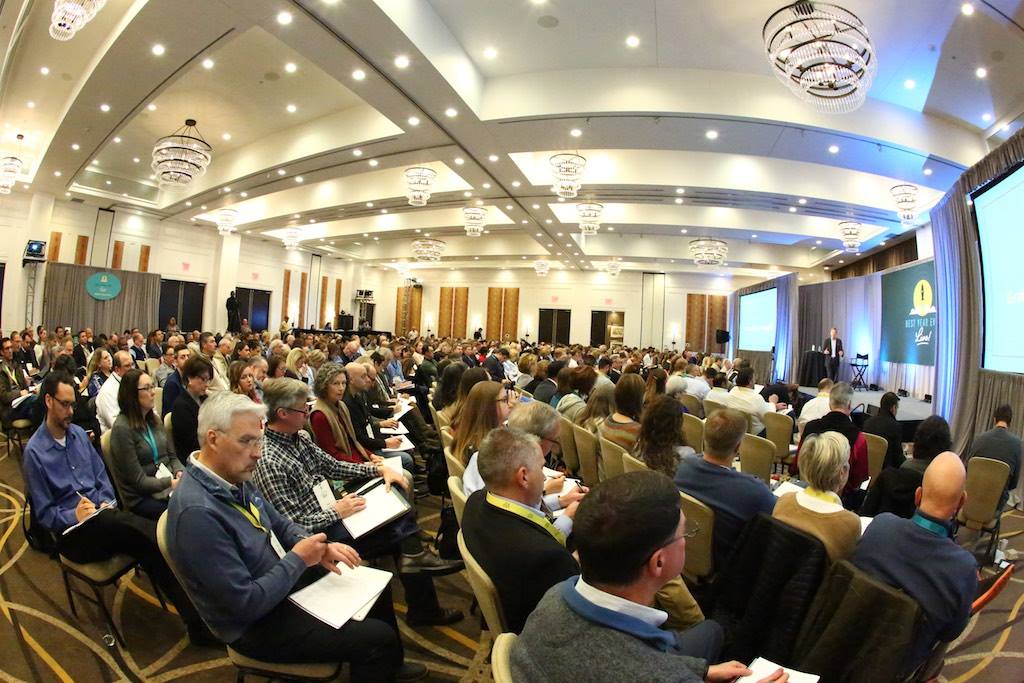
I drove two and a half hours to Nashville to meet 600 of my new best friends who also claim Michael Hyatt as their virtual mentor. It was the live event for his “Five Days To Your Best Year Ever” program. It’s actually cognitive therapy as we’re challenged to recognize limiting beliefs and begin to believe in possibilities for the New Year.

We gathered from around the world. I met an educator from South Korea and medical doctor from South Africa. Most were from across the United States with a potpourri of creative professions: artists, writers, musicians, financial planners, life coaches, professors, pastors, and ministry leaders. I was hoping to meet more than two other mental health counselors. It broadens our perspective to learn from those outside our professional disciplines. And the energy was contagious!

My seat was just a few feet from center stage to keep me from distractions. Right there in the third row smack dab in the middle. Our chairs were close and I connected with my beloved writing mentor, Jeff Goins.

It was the last day of the conference after a restless night at my Airbnb. Now wasn’t the time to get sick. I was counting on a jump start to my Best Year Ever. I was ready to put 2017 and all it’s discouragements behind. Struggling to find a box of tissues, I almost cried waking up with a stuffy head and runny nose. The dialogue in my mind went something like this:

Do I stay in bed until check out time?

Yes you can, but you’ll miss the most important part.

Do I just pack up and drive home?

Yes, but you’ll miss the energy and people you’ve met.

Oh well, just get ready and see how you feel. Take your time. Pack up. Decide later. . . .

My head got stuffier and my cough got hackier.

When your best year ever starts out wrong, there’s three impulses to avoid.

  1. Catastrophic thinking
  2. Cynical attitudes
  3. Stagnant feelings

Catastrophic thinking goes something like this:

All this money and time I’ve spent is now wasted. This will be the worst year ever. I’m never doing this again.

Cynical attitudes go something like this:

I knew this program wasn’t for me anyway. There’s nothing I can do about it now. It wouldn’t work for me even if I felt well.

Stagnant feelings of negativity and discouragement go something like this:

I might as well go home and forget about it. The people I met won’t remember me anyway. I won’t do this again.

It’s always helpful to take time to breathe deeply and tune into what your body needs rather than get caught up with those impulsive threats to our minds.

A time a meditation and prayer gave me the clarity to tune into what my body and mind needed. I chose to rest until check out, pack up, and drive to the nearest drug store for the best over-the-counter relief for my symptoms. I felt better. Determined not to shake hands or sit close to anyone, I returned to the conference.

Meditation and prayer gives clarity to tune into what the body and mind needs. Share on X

I gave up my front seat and tuned in from a distance and made sure I stayed hydrated.

After returning home I cancelled other commitments to get the rest I needed. Still a bit behind on the year, it’s possible to get back to the momentum of anticipating the new year.

Although our expectations get derailed, we can still get back on track. When your best year ever starts out wrong, it’s possible to make it right. Take deep breaths. Stay away from the catastrophic thinking, cynical attitudes, and stagnant feelings. You can still make it your best year ever!

Make it your best year ever

Find out more about Professional Women’s focus Group to jump start your first 90 days. Join me and other prospects this Friday at 2:00 Eastern Time for a free webcam Q & A.

Turkey

How Not To Be A Turkey On Thanksgiving Day


Some of us dread gathering with extended family on Thanksgiving Day. Rather than focus on gratitude and enjoying the meal, we end up feeling like roasted turkey. But it doesn’t have to be that way when we learn how not to be a turkey on Thanksgiving Day.

Holidays are strong reminders of the way things used to be. We gather with those who know our quirks, history, and points of irritation. Relationship patterns are so automatic that we don’t realize our part in creating the mess.

Even the anticipation can be stressful. We’re uncomfortable with reminders of loss. Divorce, death, or challenging relationships can make the tradition of gratitude difficult for some and unbearable for others. Some even think thoughts like, I wished we could just skip these next six weeks.

Relationship patterns are so automatic that we don't realize our part in creating the mess. Share on X

We know that Thanksgiving and other holidays can be triggers to our grief and negative thinking. It’s evident that that kind of emotional and mental energy depletes us from the warm fuzzies of gratitude. But it’s possible to choose different thoughts.

Here are six practices you can do to make Thanksgiving a time of heart-felt gratitude.

1. Practice adequate rest

Many of us disregard the basic foundation of our mental, emotional, and relational health. We push ourselves to make things just right to impress our guests. Our ability to handle stress is depleted without a consistent habit of seven to eight hours of sleep each night. Adequate cycles of sleep provide our brains the fresh charge of energy for clarity and awareness. Without proper sleep, we’re not able to cope well in stressful situations.

2. Practice deep belly breaths

Slow deep belly breaths help calm impulsive words and actions. It only takes ninety seconds of deep breathing to slow the fight/flight/freeze area of the brain that lights up when we’re triggered. We’re able to access rational thoughts when someone says a mean or hurtful comment. Ancient wisdom teaches us to be quick to hear and slow to speak. (New Testament – James 1:19)

All of us, at times, unintentionally harm others. We don’t realize it because of our own unhealed emotional wounds. With rest and deep breathing, you can control your reactions. You can stop your part of a charged incident.

Deep belly breaths give you ability to reason beyond reactivity. You create neural pathways in your brain that opens up awareness. You’ll be aware of your own body reactions. Emotional triggers affect both our bodies and our minds.

Quiet the racing thoughts and stories in your head that may not be true. Even if they are true, deep belly breaths slow you down enough to gain insight into yourself, the other person, and the incident.

Make it a point to process later through journal-writing or an appointment with your therapist. Your well-being depends on you keeping resentment from building.

Deep belly breaths give you ability to reason beyond reactivity. Share on X

3. Practice your smile

We have mirror neurons in our brains that aid our social connections. When we interact with others, we reflect their gestures, tone, body posture, and behaviors. They reflect us. We smile back when they smile at us. It’s like looking in a mirror.

A smile has the power to disarm another’s frown. Some of us were born smiling while others naturally have stoic faces. A person who looks grumpy might really be concentrating. Or they may be unaware of how they appear to others. Be conscious of how others see you. Practice smiling around those who frown. See if their frown softens with your smile. Here’s more about that: Ways to Diffuse Stress on Thanksgiving

A smile has the power to disarm another's frown. Share on X

4. Practice accepting change

Any change is difficult as we thrive on comfort and security. When our loved one has died, or we’ve experienced divorce, or we’ve moved our family across the country, it’s important to grieve. How we accept change is unique to each of us.

We are meant to grow and change throughout our lives. People, relationships, and circumstances are continually changing. Welcome the reality that our lives will never be stagnant. They’re not suppose to be. It’s part of our humanity to grieve the loss of a loved one and celebrate the birth of new life.

5. Practice what belongs to you

It’s important to know what’s yours and what belongs to another. Your emotions are yours alone. All of us are responsible for our own resilience, emotions, and decisions.

  • Avoid fighting another person’s emotional battles.
  • Let go of another person’s loneliness, anxiety, or uncomfortable feelings.
  • Recognize when others take on the victim role expecting you to be their savior.
  • Spend less time with those who drain you.

Give yourself permission to let go of others’ expectations of you. You were only meant to handle your own emotions. Others are responsible for themselves.

6. Practice the present moment

When you practice the present moment, you’re living that moment to it’s fullest capacity. This could be the single most empowering advice for us all. Hyperfocus on the unfinished business of the past or continuous worry of the future steals away the only time we have in the moment.

Imagine yourself standing still in the middle of a stream. You’re aware of the past like the water flowing toward you from upstream. You’re aware of the future like water flowing beyond you downstream. You feel the cool stream flow around you. Yet, you’re standing still in the present moment.

To sum up: DON’T BE THE TURKEY

You now know how not to be a turkey on Thanksgiving Day. Begin your six practices of gratitude.

1. Practice rest
2. Practice belly breaths
3. Practice smiles
4. Practice accepting change
5. Practice what belongs to you
6. Practice the present moment

Your next steps:


Sign up for your free Relationships With Purpose Toolkit.